Showing posts with label Benefice of Sutton Courtenay with Appleford. Show all posts

Saturday, 4 June 2016

St Peter & St Paul Appleford


This was the last churches I visited at the end of March. It's another I had been to before but decided to return for an update on my photos  so some history on the church I found in Wikipedia.

The Church of England parish church of SS Peter and Paul was originally a chapelry of Sutton Courtenay.The nave is 12th century Norman and the chancel was rebuilt early in the 13th century. Surviving early features include a Norman door on the south side of the nave and an Early English Gothic door to the chancel.The east and north walls of the chancel have original Early English lancet windows and the south wall has a Perpendicular Gothic window that was added in the 16th century.
The building was over-restored in the 19th century. The nave was remodelled and extended to designs by the architect Ewan Christian, and in 1885–86 the tower was rebuilt and the spire was added to designs by the architect William Gilbee Scott.
The tower has a ring of six bells, but currently they are unringable. The fourth bell was cast at Wokingham, Berkshire in the late 14th century, and the fifth was cast by the same foundry in the late 15th century. John Warner & Sons of Cripplegate, London cast or recast the first, second, third and tenor bells in 1886, in time to be rung for the Golden Jubilee of Queen Victoria in 1887.
Samuel Green built the organ in 1777 for Abbey House of Sutton Courtenay. It was moved to Appleford parish church at a later date.
SS Peter and Paul parish is now part of the Benefice of Sutton Courtenay with Appleford


Getting a good photo of the church is not easy due to the wall and closeness of the church to it


The tower & spire are impressive and look chunky


The north side could be better if the trees had not been planted


The East end is clear though you will find a number of graves there


I did not bother taking a view of the porch but instead went straight in the Nave


Got a bit of kilter here with the tripod showing the Chancel Arch but looking back down the nave shows it is long


The Chancel looks very busy with all the memorials in there
but I thought the altar looked very tidy with mosaic behind

Here we look back out of the Chancel towards the Nave


On the left is the pulpit which sits on a stone plinth. The organ stands in one of the arches off the chancel


Standing in the small pulpit and looking down the church lets you see this view


For a church of it's size it has it's share of memorials more than a few larger churches I have visited. The Roll of Honour is always one I will look out for


There is also another hand written roll giving the names of every one who served in the first war as well as the fallen.
On the right a Memorial to Charles Prebble


A plaque to Private Arthur Joseph Davis who died in South Africa in 1900


The two memorials here are from the Justice family


Along with this more elaborate one


Either side of the altar are these plaques, one with the ten commandments on the other the Lords Prayer & I Believe


Here you can see the top of the altar and beside it are the plaques, the two about I found hard to photograph so left them 

The only piece of stained glass shows the Lamb of God and stands behind the altar


Going back outside and look left you see the extent of the chuchyard on the west end


While looking back the headstones you see are some of the older ones


Down near the Tower you can see this fenced tomb


Near the yew tree are some old headstones, one with Ivy creeping on to it


There was one War Grave to Guardsman S.G.Broughton Grenadier Guards 18th June 1944


Over near the perimeter wall are a few more headstones


At the east end is this family vault of tombs fenced off


with rows of even older headstones


The east end of the churchyard looking North


Some of the older headstones


and a couple under a yew tree


That's it for the six churches I visited on Saturday from two benefices and by the time I got here the battery on my camera was very low and if I had completed what I had intended and got photos of the inside of the first I doubt I would have managed this one.
Have a Good Weekend


Saturday, 28 May 2016

All Saints Sutton Courtenay


I have visited the church before and on the occasion wrote a blog entitled Nineteen Eighty Four which may give a hint as to who is buried there. On that occasion I did not get to see the inside as there was a service going on plus I would not have been able to do it justice with out a tripod. Some information from Wikipedia
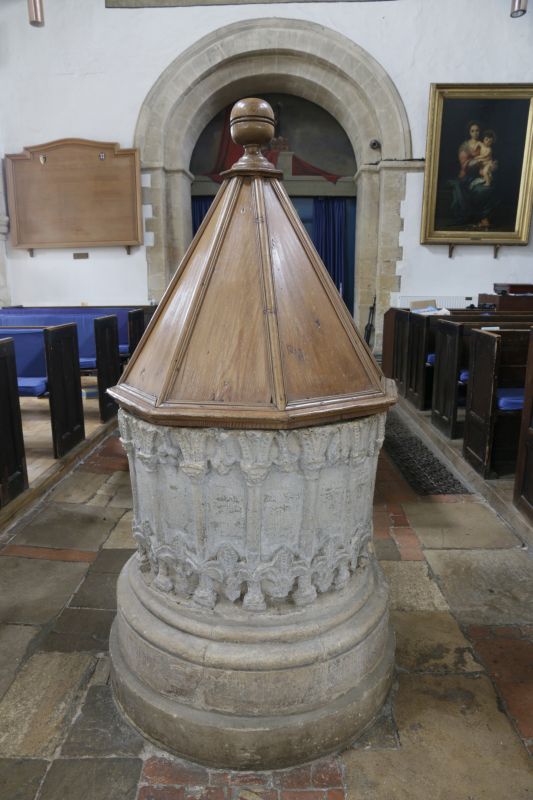
 Sutton Courtenay Church, as it stands today, originated in the 12th century. The interior shows Norman zig-zag work and later carved capitals. On the tower door, there are crusader crosses inscribed by soldiers either hoping for or giving thanks for a safe return from the Crusades. The main south door is surrounded by a brick-built south porch built with money left to the poor of the parish by the 15th-century Bishop Thomas Bekynton of Bath & Wells. Over the porch is a parvise reached by a narrow stairway from inside the church. Other fittings include a 17th-century wineglass pulpit (installed in 1901), a carved mid-12th century font with fleur-de-lys pattern and three late 14th-century misericords. There is a close resemblance between the misericords at Sutton Courtenay and those created shortly afterwards at Soham, Cambridgeshire and Wingfield, Suffolk. It is possible that the same itinerant carver made all three sets. The church was nearly destroyed during the Civil War when munitions stored by the Parliamentarian vicar exploded in the church. You can read an indepth history on it's own Wiki page


 No point in walking around the church again as you can see it all in the first link I left for 1984. But above  is  a view of the South side with the porch and on the left is the North Side


I did come across  this what was most likely the chancel cross leaning on the wall. On the Left what looks like one of the original doorways


On the left is my favourite part the porch built with money left to the poor of the parish by the 15th-century Bishop Thomas Bekynton of Bath & Wells. I'm sure the poor were grateful. Can you imagine the outcry if some one did that now

 The first place I did go was into the church and was rather knocked out by what I saw and really never know where to start when that happens as there is so much to see. The Nave looking down to the Chancel

  Turning round and looking back to the font


Back again to view through the Chancel arch to the Chancel


Above in the chancel to the altar between the choir stalls and on the left is the altar with pouter cross and candle holders


The superb crucifix on the altar


Viewing from the side gives better view of the candle holders


Above the altar you see this superb Chancel Window


Not far away is this tomb effigy of a monk


and nearby what loos like an altar but cold be a tomb
The chandelier hangs in the chancel with candles in place


Here we look through the chancel past the choir stalls to the nave


The church does have it's fair share of memorials with the Roll of Honour from the second world war or Family memorials like the one on the right


This memorial attains to John Thomas Justice  who lies in the catacombs of St Clements Hastings


While his Farther & Mother I presume are buried at this church


Another memorial to the Justice Family on the left though I found the memorial on the left unreadable


 Most of you should know who George Orwell is


I never read the one here on the left so I presume I must have been stood by their grave.
Memorial to William Curtis on the right


 The Dewe Memorial


The Body's of John & Sarah Heath lay buried near the memorial though I could not say if that was in the church or in the churchyard.
While you can see the Philips memorial over the entrance door


The Curtis Memorial

Also came across this memorial to Lord Wantage VC who is buried at Ardington


 Couple of the vaults in the nave floor which are the largest ones you can see

The pulpit I must admit was tall, one of the tallest I've come across with it's (you will like this) abat-voix or Sounding board which is the bit above


Looking up you could see a dove in the centre and if you looked at the pulpit you can see it is what they call a "Wine Glass Pulpit" with the slender base


Anyway I was soon up  there to get a view vicars through the centuries must have seen (mind you there would have been people in the pews) and I doubt has changed. It did worry me a bit in case the wine glass part broke on me though


I now show some of the other features round the church like the donations panel you see above.
At the back is a coat of arms with the ten commandments either side


I love this bequest giving money to six poor women every sabbath day, wonder if they still do?
This superb mural is under the coat of arms at the back of the church


and what I tough another bequest turned out to be a memorial


This mural behind an altar frames the church roll nicely


Not as many stained glass windows as I thought but they are pleasant enough to look at


Could not say how old the organ is but there is screened room beside it


Here we look from the nave to the North Aisle


The South Aisle is where you find the church roll and altar


The roof looks as impressive for it's age


On the left is the South Aisle while on the right we view the South Aisle looking towards the pulpit


We will leave the church with a look at the Font


heading down the churchyard to the part that is still in use


As you can see it is well kept and the grass cut
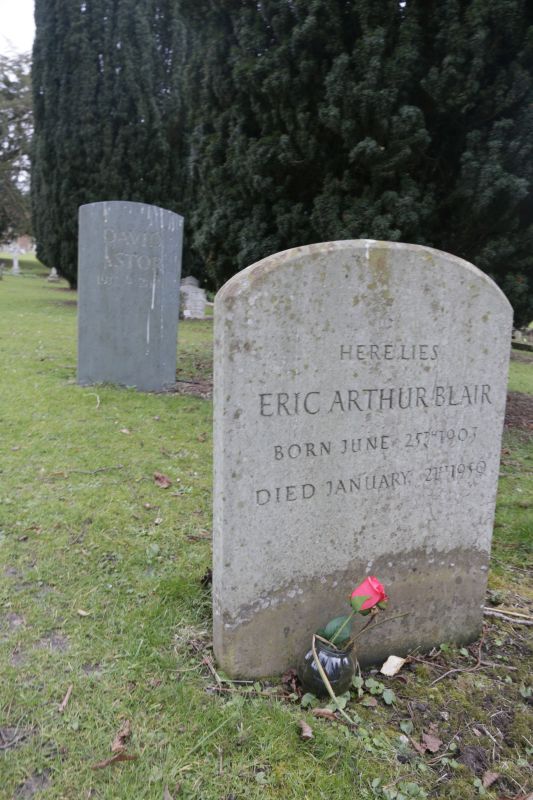
Walking back along the churchyard you will find George Orwell or Eric Arthur Blair as you will see on his headstone. Behind is David Astor his friend 


Over one side I spotted this wooden head and foot memorial, on the right a view up the churchyard


The large tomb you come across is that of Herbert Henry Asquith who is buried here with his wife, he was the Prime Minister of the United Kingdom from 1908 to 1916.


The tomb on the left I though usual while the little angel on the right looks over the grave of the child below


Go round the front of the church and you find these headstones


On the South side you see these older headstones


Along with this tomb that looks very old as well
At one time I dare say this headstone looked more impressive than it does now

A couple more cast iron crosses used as memorials of a different time that I have seen


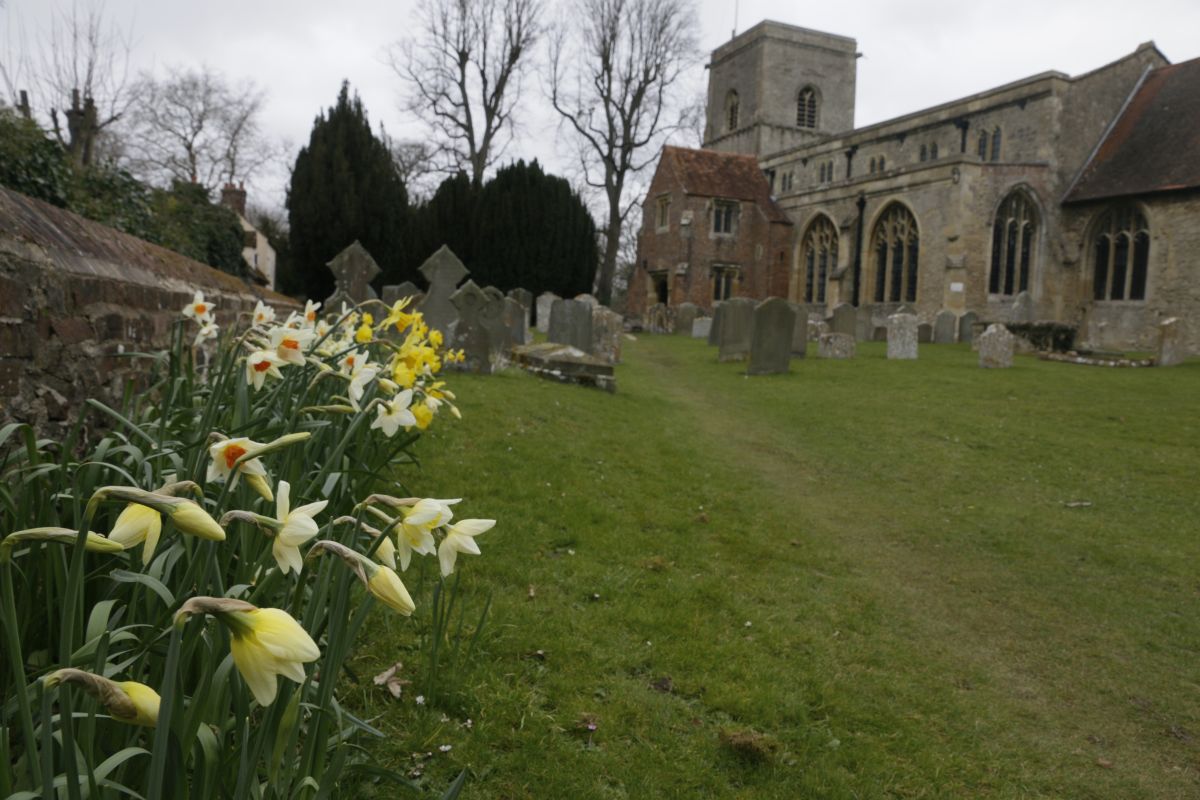
I will leave you with this view showing the daffodils growing beside the wall with All Saints in the background. If your round Sutton Courtneay then it is worth the time visiting the church.
Have a great Bank Holiday Weekend