Thursday, 18 October 2012

St John the Baptist Mongewell


St John the Baptist Mongewell  has to be one of my favourite churches and though a ruin the chancel has been kept and made into a chapel which is used a couple of times a year. It is now looked after by the Church Conservation Trust. The photo's were taken at different times of the year as you will see.
A little history from Wikipedia
" The church dates probably from the 12th century. It was remodelled in picturesque Gothick style for Rt. Rev. Shute Barrington late in the 18th century. Barrington was Bishop of Durham and the penultimate with highly exceptional great non-church powers namely by the position being one of Palatinate Prince-Bishop. When he died in 1826, he was buried in the family vault in the church. The church was restored under the direction of the architect Lewis Wyatt in 1880. It was designated a Grade II listed building on 9 February 1959 The church was declared redundant on 1 July 1981 and was vested in the Churches Conservation Trust on 31 July 1985. For access, the keyholder can be found nearby."
 This is an updated blog with photos I did not post originally

 At first you would not think anything was amiss with the church


Round the side you see the walls are missing but there are graves in the churchyard still.


Walk along a bit further and you see a small apes chapel off to the North


The entrance to the chapel is on the south side through the doorway you see on the right, ahead you can see the entrance to the chapel in the old Chancel


 Looking West from the Chapel door you see the belltower ahead, I might add it does still have a bell hanging in it. Over to the right is the entrance to the apse


Above this what you find in the apse, a tomb, left the old entrance door to it.

Right the Tomb which may have been used as an altar one time with old grave crosses on the top

 The West end looking to the tower


The tower still has a window casement and some glass still in place.


A locked door leads to where the bell used to be rung


The entrance in the South wall


By the chancel arch you can see these steps to a plinth I have no doubt that these are the remains of the pulpit with a stone capping from the church sat on top

 I went back another time to get more photos in early January and found the place still decorated from Christmas
The Altar was decked in Ivy
the whole place had a different feel to it


Looking up to the roof of the Apse


The stained glass window in the centre of the apse


There are a couple of memorial in the church, this one is the biggest showing a reclining figure
 Another are the busts of couple


The bible on the lectern looks as though it has seen better days
 The font on pillars is certainly Victorian


Outside you can see quite a few old headstones


The words on the head& footstones still readable


These two have a tomb over them as well


The churchyard is well sheltered with yew trees

On another occasion I visited the church when it had snowed and found a whole different look to the place


The family vaults near the North side covered in show


snow topped the walls


and covered the floor of the inside of the old nave


The Apse on the north side was full of snow


The ruins looked an felt very cold
 From the west end it looked stark
Later in spring the place had a warmer look about it
I intend to return again to get new photos at sometime
Till next time please stay safe


Monday, 8 October 2012

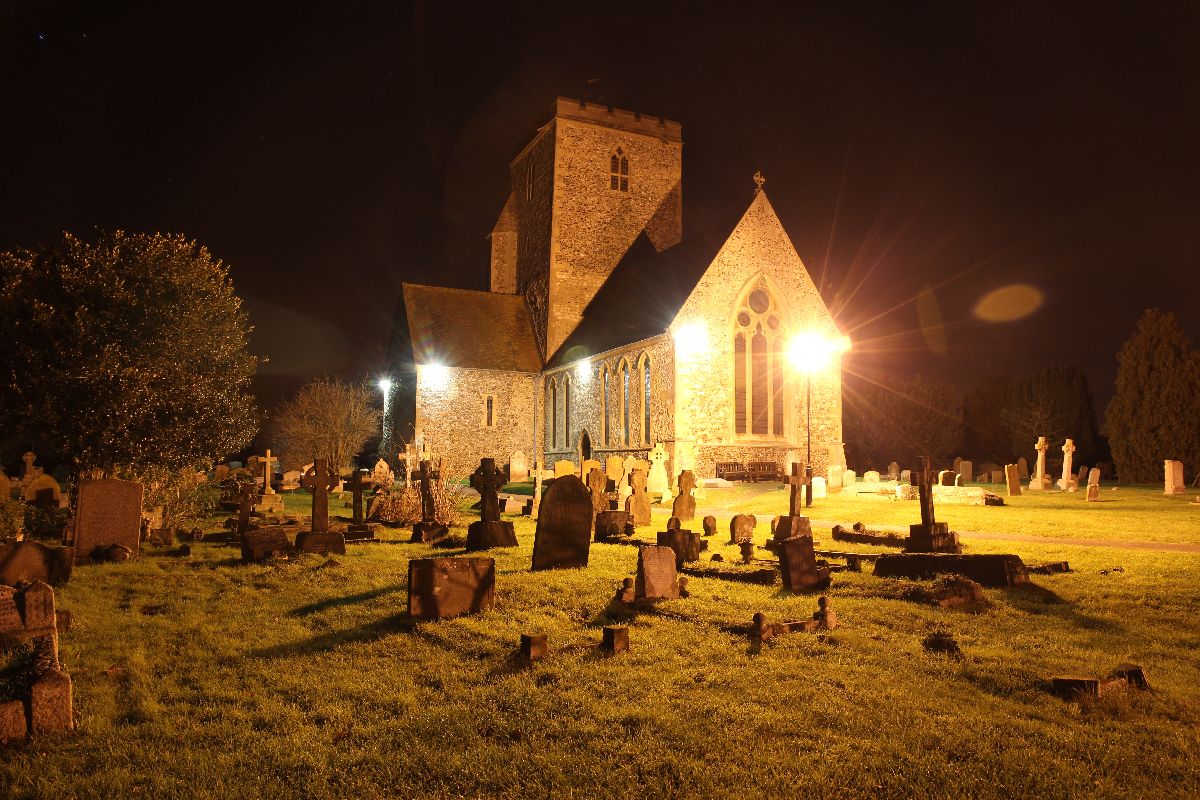
A Churchyard at Night


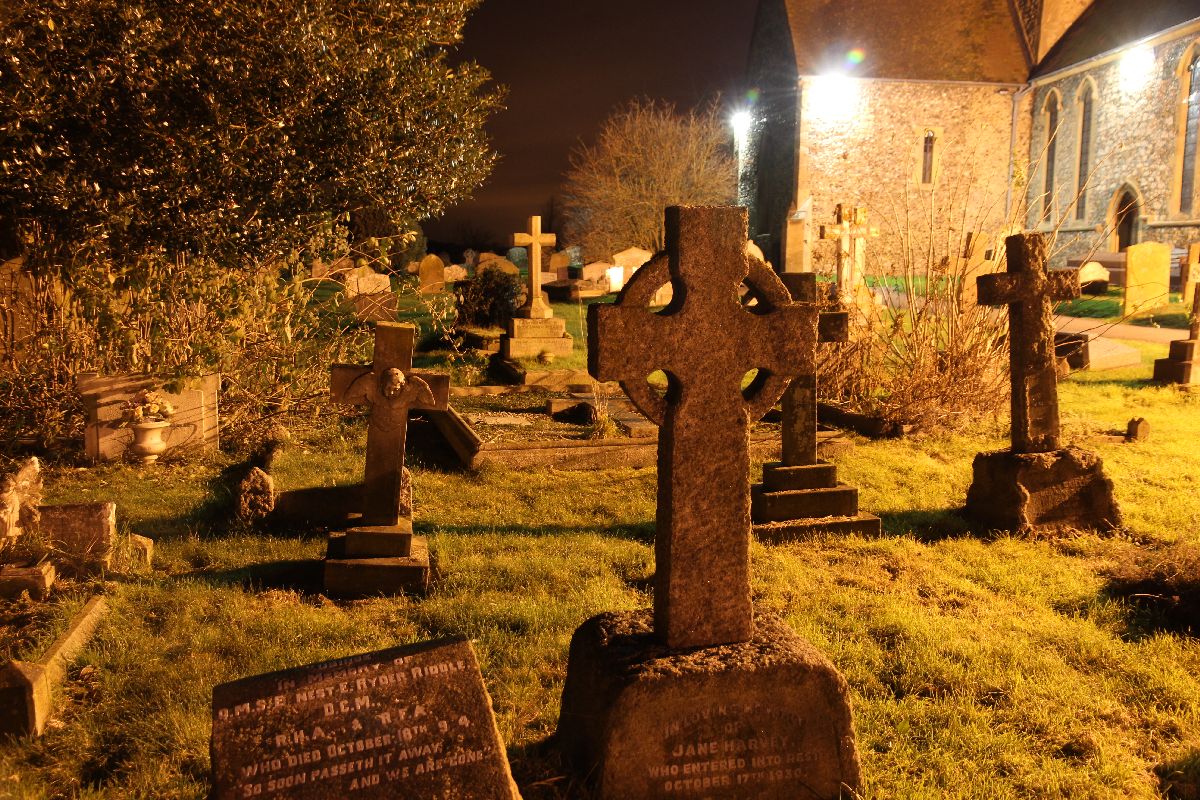
I took these night photo's around Cholsey Churchyard, it was the first real time I had tried night photos. The old post was linked to Flicker so I have updated the post
A couple of years ago I decided to try my hand at night shots and I thought Cholsey Churchyards a good place so I thought I'd share with you what I took. The view above is St Mary's church which as you can see is well lit
Part of the churchyard looking towards the chancel.
You might recognize this as it is what I use as the background on my blog.
Some of the old headstones beside the chancel.
A week or so later it snowed so I went back for some more of a snowy churchyard
 Looked so much different
 Very near where the background photo comes from
Beside the Chancel
Both sets were taken in November and December 2010 and I can tell you it was dam cold but it is coming back to that time of year again so I'll be going back to get a few more photo's
Till Next time Say Safe everyone

Thursday, 4 October 2012

The Howff Dundee


This was first published back in 2012 but I have now updated it with photos I did not publish before

The Howff is a cemetery in Dundee, and until I spotted the place I never knew of its existence but I was mesmerized once I walked in the place. I had never seen such a crowded cemetery before.
"The land of the burial ground was part of the Franciscan (Greyfriars) Monastery until the Scottish Reformation. In 1564 Mary, Queen of Scots granted the land to the burgh of Dundee, for use as a burial ground. It was used for meetings by the Dundee Incorporated Trades, and subsequently became known as The Howff, from the Scots word howff meaning a meeting place. Meetings at The Howff ceased in 1776.The last burial took place in 1857. The walls along the west side date from 1601." (taken from Wikipedia). If you are ever in Dundee then this place is a must to visit my only disapointment was I did not see the grave of James Chamers inventor of the postage stamp who is buried in the cemetery.

Looking across the cemetery


Above one of the tombs which took my eyer with the skull and on top a skeleton

Looking the towards the D. C. Thomson building the where the Beano and Dandy were printed.

Below a similar view from nearer the building


Some of the headstone the wording was very clear.

Right a Table tomb
Around the walls are a few vaults
Looking at how close the tombs and graves are together you have to wonder is the other was disturbed during the burial, from what I read many were.


Seagulls are one thing you never get away from
Being as it is a harbour port they get everywhere


 One of the memorials attached to a wall and some of the monuments and graves
 Some places the grass is worn away between the graves
 A lot of tombs have some intricate carving on them


The gnarled trees that you can see growing give the cemetery a creepy look


The limbs twist all over the place. My son is stood looking at a grave in this photo, he is over six foot tall and the monument behind him is double his hight
 A lot of stones have erected by on them and the deceased in smaller letters below. This is so the predominant benefactor can be seen to have buried the person.


One of the old entrance gates and Another view towards the Thomson Building
 And this the meeting place, it was a tradition to leave some money which still happens as coins are still left on top.


The grass is kept short which is good to see
 There are a few trades shown on this headstone which is in good condition considering it was put there in 1796
A couple of the paths that take you through the Howff. It was a visit I really enjoyed when I was there in 2010 to see my son. I have not been back their since but if I ever go back to Dundee this place will be one of the first places I will visit. If you are ever there then spend some time looking around the cemetery, it is well worth it.
Till Next time
Take Care and Stay Safe