Showing posts with label Wantage Downs Benefice. Show all posts

Saturday, 22 September 2018

All Saints East Lockinge


This is one church I have been trying to visit for a while since seeing it while driving past it one day. Finally got around to visiting it the other day. Looking at where it is built you would be forgiven in thinking it was built by the manor but in fact it is older than it looks as I found out when I noticed a date for the tower of 1564 on the side of the church. 
The history is from Wikepdia.
"The Church of England parish church of All Saints was built in about the middle of the 12th century. The Norman north door of the nave survives from this time. The chancel and the south chapel parallel with it were built in the 13th century but the chancel was rebuilt early in the 14th century. A south aisle was added in the 13th or early in the 14th century. A window in the north wall of the nave was added in the 15th century, but was altered to accommodate the west belltower that was added in 1564.
In 1886 the south aisle and chapel were demolished, the three-bay arcade between the south aisle and the nave was rebuilt and a new nave and chancel were built in place of the demolished aisle and chapel. This became the main body of the church, leaving the earlier nave and chancel as a north aisle and chapel. The reredos paintings are by the Arts and Crafts movement artist Kate Bunce and their beaten metal frames are by her sister Myra Bunce. Lady Jane Lindsay, presumably a relative of the Colonel, designed the glass of the east window.
The tower has a ring of four bells. The oldest is the treble, cast in 1578 by Joseph Carter of Reading, Berkshire, who later became the master founder of Whitechapel Bell Foundry in London. The third bell was cast at Reading in about 1599. Robert II Wells of Aldbourne, Wiltshire cast the tenor bell in 1793 and he and James Wells cast the small Sanctus bell in about 1795. William Taylor cast the second bell in 1852, presumably at the foundry that the Taylor family then had in Oxford. Currently for technical reasons the bells are unringable."
Unfortunately for me I found the doors locked to the church so no photo's inside


You have to come down a long a drive to get to the parking area near the church, then you are greeted by these gates that open to a path taking you to the church. Either side you find it is fenced off

The entrance to the church is though the porch on the South side this one is on the North side


Over to the left you see the bell tower on which is a sundial the marking on which are still visible


Over to the right past  the fence the South side of the church extends in the pastureland


Go over the stile beside the West end of the church and you get to see the end of the South aisle and belltower

The West end of the church looking up the belltower


Going around to the North side and a gated and fenced path leading to the porch that shelters the North door


The North side of the belltower and the date plaque showing 1564


Looking across the churchyard to the North side of the church


The East end and South aisle


The south aisle and side chapel


Some of the headstones near the fence


More near the boundary which are in the nettles


The churchyard seems like it is in the pastureland though not far away seem to be boundary markers for the churchyard


Couple of tombs, one seems longer than the other indicating they were quite tall


 The top of one of the tombs


View of the two tombs with the longer on In the foreground
 Above this tomb is on the East end of the church and belonged to a past rector of the church


By the North porch you can find this old headstone


 That is all I can show you for this week, hopefully I will get to return to take some photos inside. Until next time have a peaceful weekend

Thursday, 10 March 2016

Return to West Hendred


I have been wanting to return to this church for a long time and finally I managed to return to get some photo's of the inside. Last time I was teased with a glimpse through the window while a service was happening on a Sunday.
The Holy Trinity church is a 13th-century building on the site of a former wooden Saxon church, with small flying buttresses and a series of carved sundials on the wall outside. The most notable historical element of the church is the floor tiling. These are good examples, if worn, of medieval tiles. (Taken from Wikipedia)
I must admit I have not noticed the sundials on eiter of my visits but will look when I get a chance


The place has changed little since I was here last but this time the weather is better.


The churchyard is like it was though I did notice this head & footstone which were unusual


Near the church is this tomb which is becoming a little covered in grass


Looking ahead you see the church porch which is quite original.


That's because some one carved a date in it


And WC did it 100 years later in 1761, mind you I do wonder if it was the same person who got the date wrong.


The Door beckoned would it be open. 


Some how I think it was


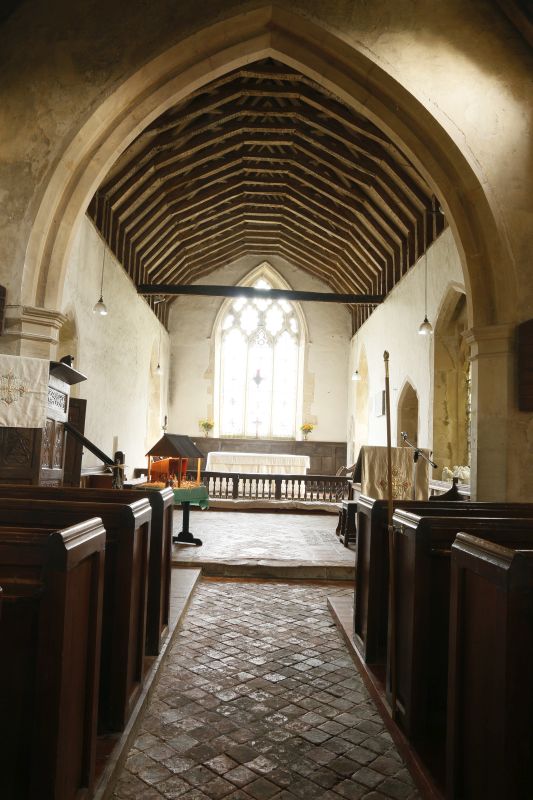
Go through the door and this is the view of the church you get.


Walking to the centre of the aisle  gives view of the nave


Stand in the belltower and see the North and South aisles as well


Off in the North aisle you can see the church organ at one end almost hidden turn round and you see the arch leading to the bell tower


Look down and you will see the tomb of Margaret Parkes who was the daughter of John & Margaret Pope who lived in Ginge 1747 you can see the medieval tiles on the floor as well

Looking up to the ceiling you will see a roof joist dated 1746

The Cancel from the nave


Here we look at the altar in the chancel


The altar is left unadorned with just a cross in the sill of the chancel window


The window if you looks seems to have odd bits of original stained glass in it


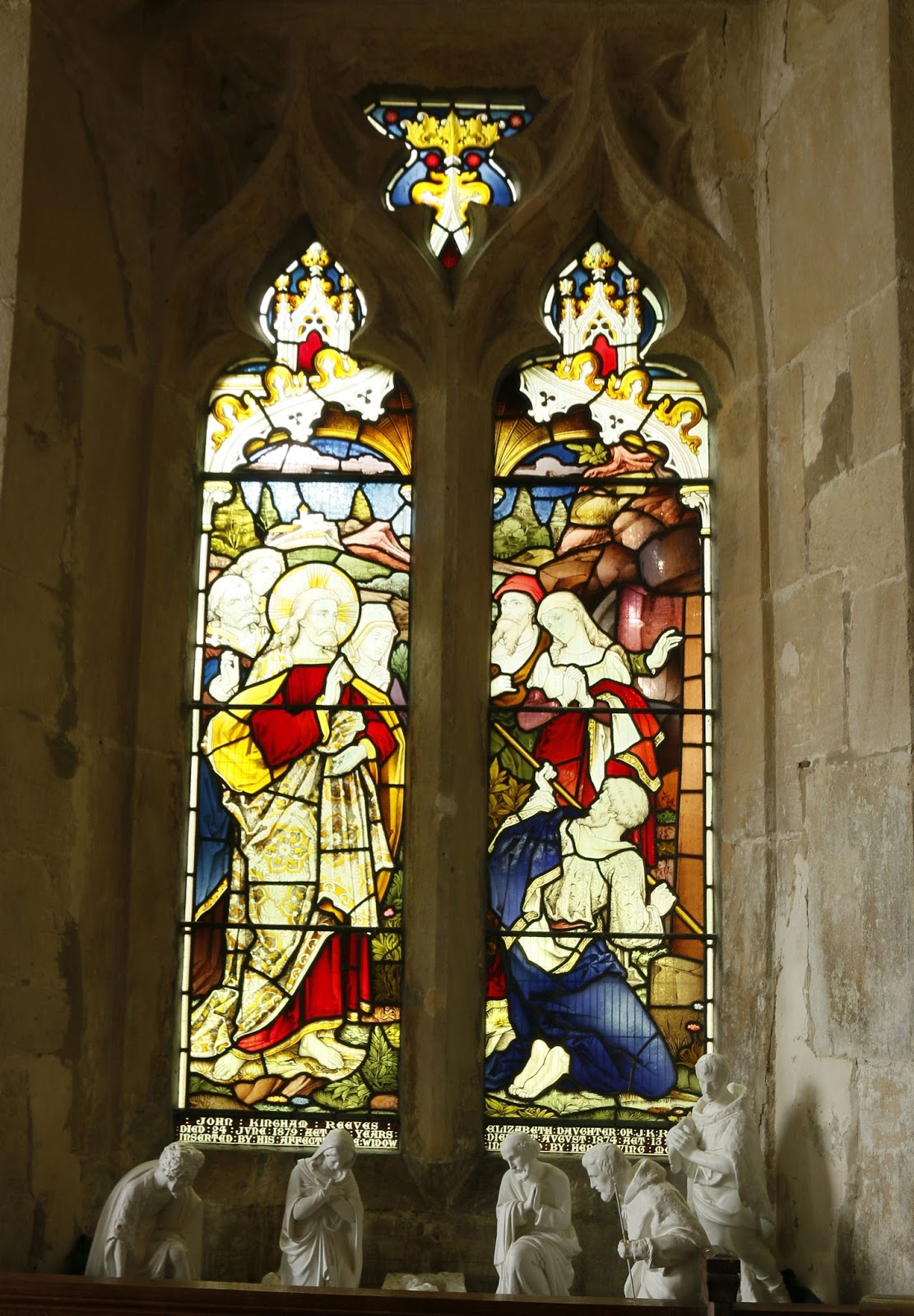
But there is other stained glass to see in the chancel which is not so old


The north Aisle also has some partial stained glass

Which is a shame as it makes me wonder why this is.


Walking along  the chancel you will see  various memorials on the floor like John Baker vicar of the parish died in 1790


This one says H.S.E Rob Bolton A.M  C.C.C Oxon Soc.
Octob: die 19 1699


Rev John Spry departed this life October ninth 1703 age 76. a good age for some one of that time


In Memory od Dulcibella y wife of M Richard Tub od Welt Hendred who died y 22 march 1719 age 49 years


The on eon the left is by the altar and is to Mary wife of Thomas Wighr who was the vicar. She died aged 81 on 1721.
On the Right you can see the wonderful times and the memorialslet in the  medieval tiles


This is the roll of honour for the fallen in the First World War and is in the panelling round the altar

View through the chancel to the nave


By the altar you can see this small icon of the Madonna an child, the carved Pentecostal candle holder and candle is by the choir stall


The aisle floor of medieval floor tiles looking to the back of the church

The nave from beside the pulpit


This is a carved choir stall  get a load of the date on top. Initialed 1630 I P  T S
I wonder who they were
to the right is the carved pulpit maybe of a similar age?


This is the view of the nave you get 


and for one a nice view of the North aisle


Google was good enough to stitch them together


The memorial you can see is to Shoeing Smith George Aruthur Alder who dies in South Africa 1900


The North aisle I'm affraid the one I took in the south did not come out well


By the window in the North aisle is the Bible dated 1864


The carving on the front of the pews in the church


The on ething I did get in the South aisle was the font and cover


but a couple of people had done their graffiti on the cover R W in 1697 and X in 1833 is nothing sacred


Just in the chanel the nativity scene was still there, must take it down after the Epiphany


At the back of the church in the tower window is this wonderfull olf commoration plaque with a few local names I recognise
On the arch as you come is you will see this beautiful hand written and framed roll showing who served in 1914 -1918.

With a last look at the church I'll say I hope you enjoyed your look round the church as much as I did returning to see it.

Have a Peaceful Weekend