Saturday, 17 June 2017

St Bartholomew Brightwell Baldwin


I have been meaning to visit this church for quite a while since I missed it when I visited the other churches in the area a while ago. The church is 14th century and looking around you casn see it does date back to that time. Some history from Wickipedia

"The earliest parts of the Church of England parish church of Saint Bartholomew are 13th century, including a stair turret and a number of lancet windows, notably in the chancel. Early in the 14th century the nave was rebuilt in the Decorated Gothic style, with north and south aisles linked to it by arcades of four bays. The west tower and the Perpendicular Gothic east window of the chancel were added in the 15th century. The pulpit and tester are Jacobean and therefore 17th century. The building was restored in 1895 and is a Grade I listed.
Church monuments in St Bartholomew's include a number of brasses. In the north aisle is a brass commemorating John the Smith, who died in 1371.It bears an epitaph written in Middle English, which may be the earliest example of an inscription in the English language.The epitaph reflects upon human mortality:

man com & se how schal alle ded li: wen yolk comes bad & bare
moth have ben ve awaẏ fare: All ẏs wermēs yt ve for care:—
bot yt ve do for god ẏs luf ve haue nothyng yare:

yis graue lẏs John ye smẏth god yif his soule hewn grit
In the chancel are two brasses commemorating John Cottesmore, who died in 1439.Stone monuments include two 16th-century chest tombs of members of the Carleton family, and a substantial English Baroque monument to members of the Stone family on the east wall of the north chapel. The latter was built in about 1670 or 1690,replacing monuments to John Stone (died 1640) and his son Sir Richard Stone (died 1660) that were destroyed in the Great Fire of London in 1666.
The bell tower has a ring of six bells. John Saunders of Reading, Berkshire cast the tenor bell in about 1559. Ellis I Knight, also of Reading, cast the fifth bell in 1637.Mears and Stainbank of the Whitechapel Bell Foundry cast or recast the treble, second, third and fourth bells in 1911. There is also a Sanctus bell that was cast in about 1550.
The churchyard includes a late 18th-century chest tomb a number of 17th-century gravestones that are Grade II listed. Another 17th-century monument commemorates one Stephen Rumbold, who died in 1687 aged 105. On it a rhyming epigram bets with its readers:

He liv'd one hundred and five
Sanguine and Strong
An hundred to five

You do not live so long[
St Bartholomew's parish is now part of the benefice of Ewelme, Brightwell Baldwin, Cuxham and Easington."
  
After going through the photos I have decided that to split this blog in two parts as the inside deserves one of it's own due to the stained glass and memorials there


Above the photo I took with my phone  and left the church as you walk up the path


Looking up the second path to the porch


The tower looks like many other local churches with the spiral staircase on the outside
The doorway leads to the church bells


Here we go around to the North side of the church and you can see the North aisle and the chapel that has been added to the left


This is the chapel which belongs to one family and is at the end of the North Aisle


Looking to the East end and the chancel, the family chapel is to the right


Back around to the South and the main entrance porch


View to the tower


and a look at the East end and a huge buttress


The churchyard is very neat & tidy and has a lo of old headstones in it


Though one small area around the North side has been left to grow wild like many other churches


Few of the headstones, the one in the fairground has an owl carved in it


Belonging to Geoffrey Crossley

On the north wall , a memorial to William Phelp


Nearby one to Anne Sheepherd and her daughter Mary


This is the churchyard at the East end of the church and more recent


Looking West and older headstones


The East end again


An old brick tomb with ivy growing on it


Above a memorial to Henry Saunders and his family on the South wall of the church


Couple of nice old headstones from the 1800s


This headstone nearby made me look as the date 1662 is near the bottom


Above I think the headstone is of a similar age though it has sunk in the ground more. Left a row of graves with headstones and coffin like slabs between them


That's it for this week I'll show you more from the inside next week. I'll leave you with a photo of the Lord Nelson Pub which is opposite the church.
Have a great weekend and remember in your thoughts those who dies in the Fire at Grenfell Flats in London last week  


Sunday, 11 June 2017

A Teazer form the Church Explorer


It has been a few weeks since I posted a blog so I thought I'd let you all know that that I have not forgotten or given up. The reason was because I ran out of material and had not visited any new Churches plus I had some work to do on my house so did not get a chance to visit any but today I did but you will have to wait until I write the blog which hopefully will be next week. In the meantime here is a Teaser for you. I will not tell you where it is but I will tell you it is a 14th Century church. 


 The church from the roadside


A relic that is in a chapel

One of the Medieval stained glass windows


The Chancel
Hopefully I will have the blog written for next week 
Have a good Weekend  


Saturday, 13 May 2017

Fairmile Cemetery Henley


Going to Henley along the A4130 at the bottom of Bix hill you drive past  Fairmile Cemetery Henley 
 I often wondered what the place held so one day stopped off for a look around. The cemetery was opened in 1868 on the outskirts of Henley in Bix & Assendon Parish and contained a lodge and two chapels one of which was a Non Conformist the other a Church of England a service at 3pm every Sunday on one of the chapels through out the 19th century. Now adays they are not in regular use and fell into disrepair, they are both now grade II listed buildings  


I'm not sure if this was the old road leading to the entrance


which is here. I suspect this was the original main entrance where people came to visit the cemetery


The gateposts are becoming covered in ivy but the gates still hang in place


Walking in the main gate you see the Church of England chapel with its bell tower and short spire 


It's quite a Gothic looking chapel 

This grave I saw nearby stood out and is to Captain James H Blacklock who I can find no information about
"In affectionate remembrance of Captain James M. Blacklock late submarine superintendent of The Electrical and International, the Postal, the Anglo-American and French-Atlantic Telegraph Companies. Born 6th September 1818, died 14th June 1873."


His grave is the tomb you see in the foreground 


Going up the cemetery and looking down at the chapel


Further along you can see the non conformist chapel


Outside the gates on the Henley side which is the entrance used today


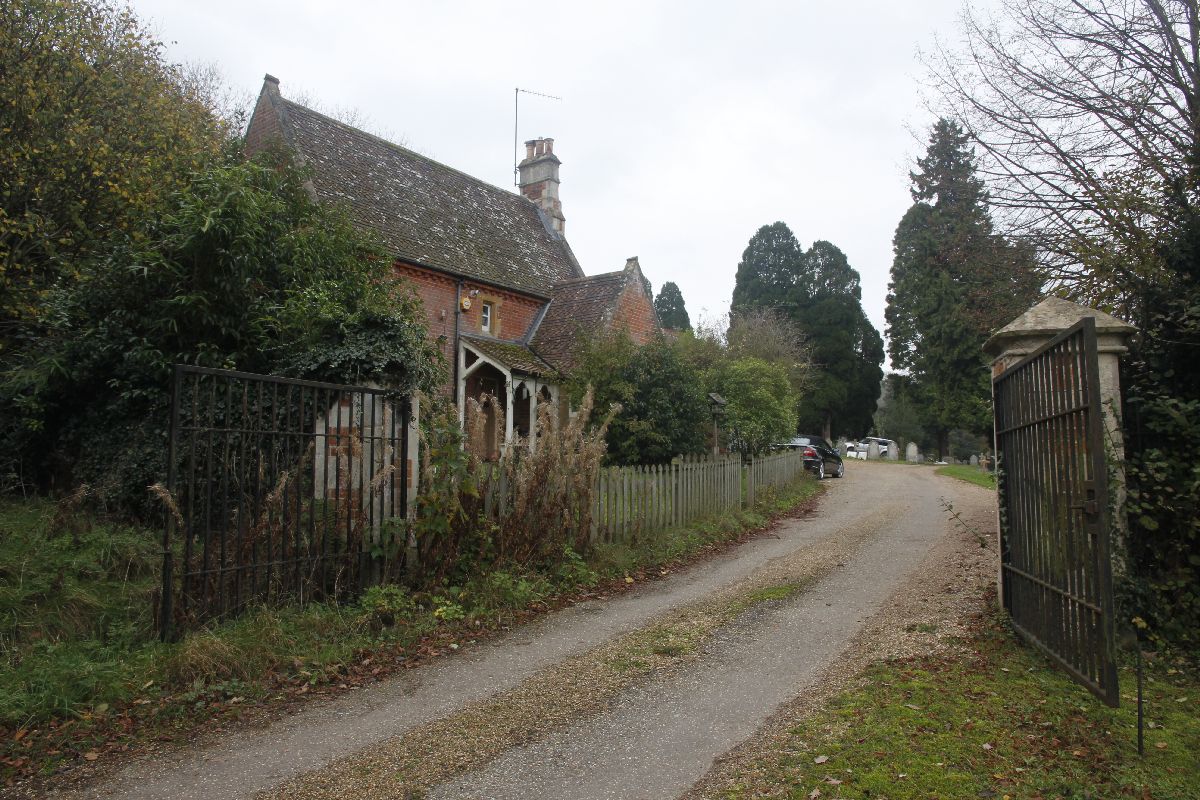
The Cemetery keeper Cottage. When the cemetery opened it would have been his job to open and shut the gates plus keep an eye on the place. A few years after I took this photo the building was badly burned but has since been restored

The non conformist chapel  with one of the sweep around drives


The east end of the non conformist chapel were you can see the belcote has been removed due it it being unsafe


A line of graves all the same which made me think they were all of the same family


Some of the crosses in the cemetery


the cemetery is quite easy to walk around with the drives in place


Above the non conformist chapel
with some of the nearby graves. Right looking along the cemetery near the road


Arthur Richard Lloyds and his wife Mary , the memorial below is to their son Cyril who died in the war


View of the old cemtery at Henly

Looking at the Church of England Chapel


One of the few angel memorials you can see in the cemetery


Which stands beside a few different headstones


I had not seen a stone like this before with the two pillars and slab in the middle


Much love couple, I like the verse in the heart. Their grave can be seen in the photo with all the flowers on it. I might add I have never not  seen this grave with out fresh flowers on  it


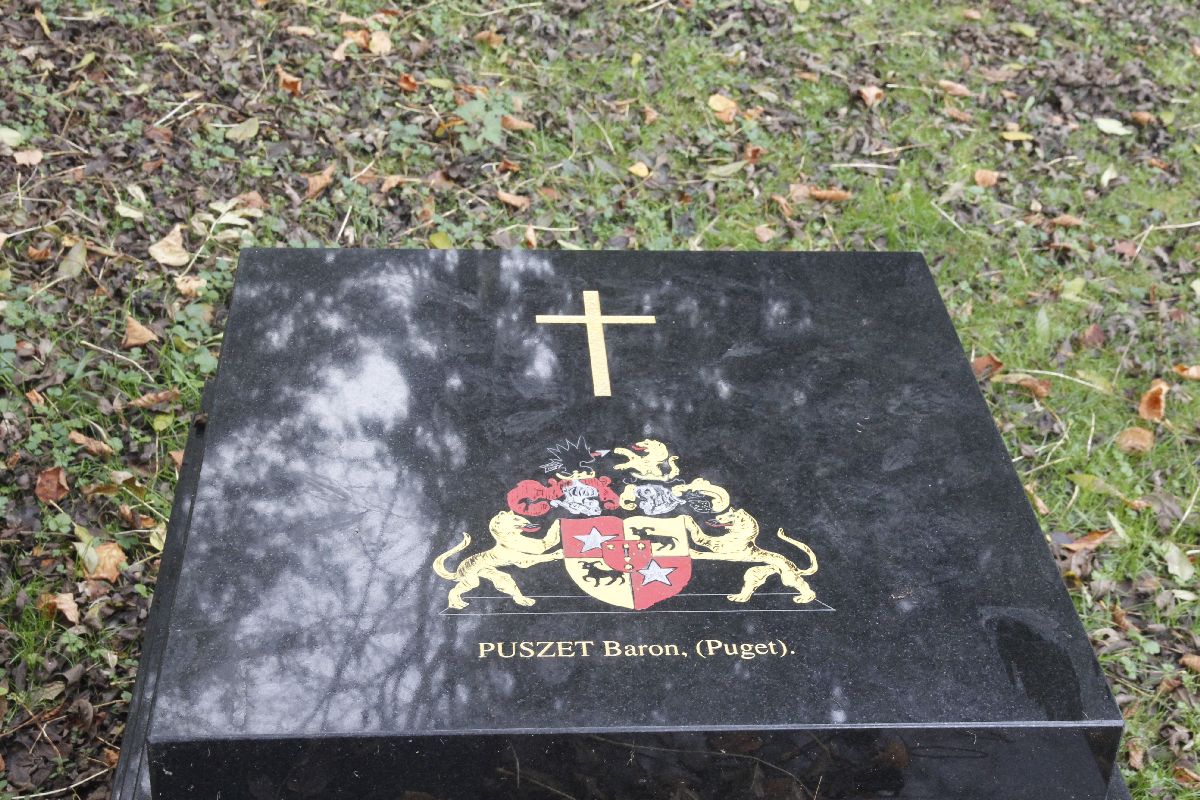
Never heard of this barron


but there is a coat of arms on the top


and the grave has quite a view down the cemetery


Seat near the top of the cemetery


The woods behind though I did wonder if this was part of the cemetery that was overgrown


I did notice the cemetery had it's fair share of war graves in it
Flight Lieutenant F.A.C. Goodwin 


The Addington family Memorial, the son was Squadron Leader Thomas Waddington who was killed near Gibraltar 


Sargent H.W. Lucker was Flight Engineer on
Lancaster ED439 took off from RAF Wyton at 1010 hours on 18th June 1943 to carry out
a day practice bombing training exercise, but the aircraft did not carry out the detail. It
dived out of cloud and struck a house at High Gate Farm in Swaton, 7 miles south east of
Sleaford, Lincolnshire, UK. All the nine on board the aircraft were killed


Sapper William Lea 
Royal Engineers 3rd May 1915 age 30 
 Lieutenant A.J. Ayling
R.E.M.E
11th June 1943 age26


He is buried with his wife in a family grave


Private H Sheldrake 
died 1918
 and  
F.H.Bishop
died 1940


F Sherval of the Berks Yeomanry


The new cemetery which since I has even more graves in it


I'll leave you with this photo of Joe's grave, I started off this My Grave Place blog with a piece on Joe since then I have been to many more churches & cemetery's and changed the name of the blog.

 Hope you all have a great weekend