This week we return to Wales where we will be for the next few weeks. The first one is St Gwendoline in Llyswen a small village not far from Talgarth along the A470 to Builth Wells. It is sat back off the road a little down a lane and is not very far from the Rive Wye. I have passed it many time on my way to Builth and have wanted to visit for quite a while.There is a little history on the church in Wikipedia.
"The site of the parish church may be of equal age or older. It is dedicated to St Gwendoline, one of the many saintly offspring of King Brychan of Brycheiniog, who is said to have been killed by pagan Saxons and buried in nearby Talgarth. Unfortunately the church was destroyed and rebuilt in 1862 and only the Norman font remains. Unusually, this destruction (common in the Victorian period) drew adverse comment at the time. A contemporary editorial in Archaeologia Cambrensis said: "We are sorry to hear that this ancient edifice has been pulled down...We have no right...to remove the handiwork of our forefathers...It would be better to let the old buildings, plain or ugly as they may be, pass down unscathed to our children, who will have more respect for them than is shewn by ourselves."

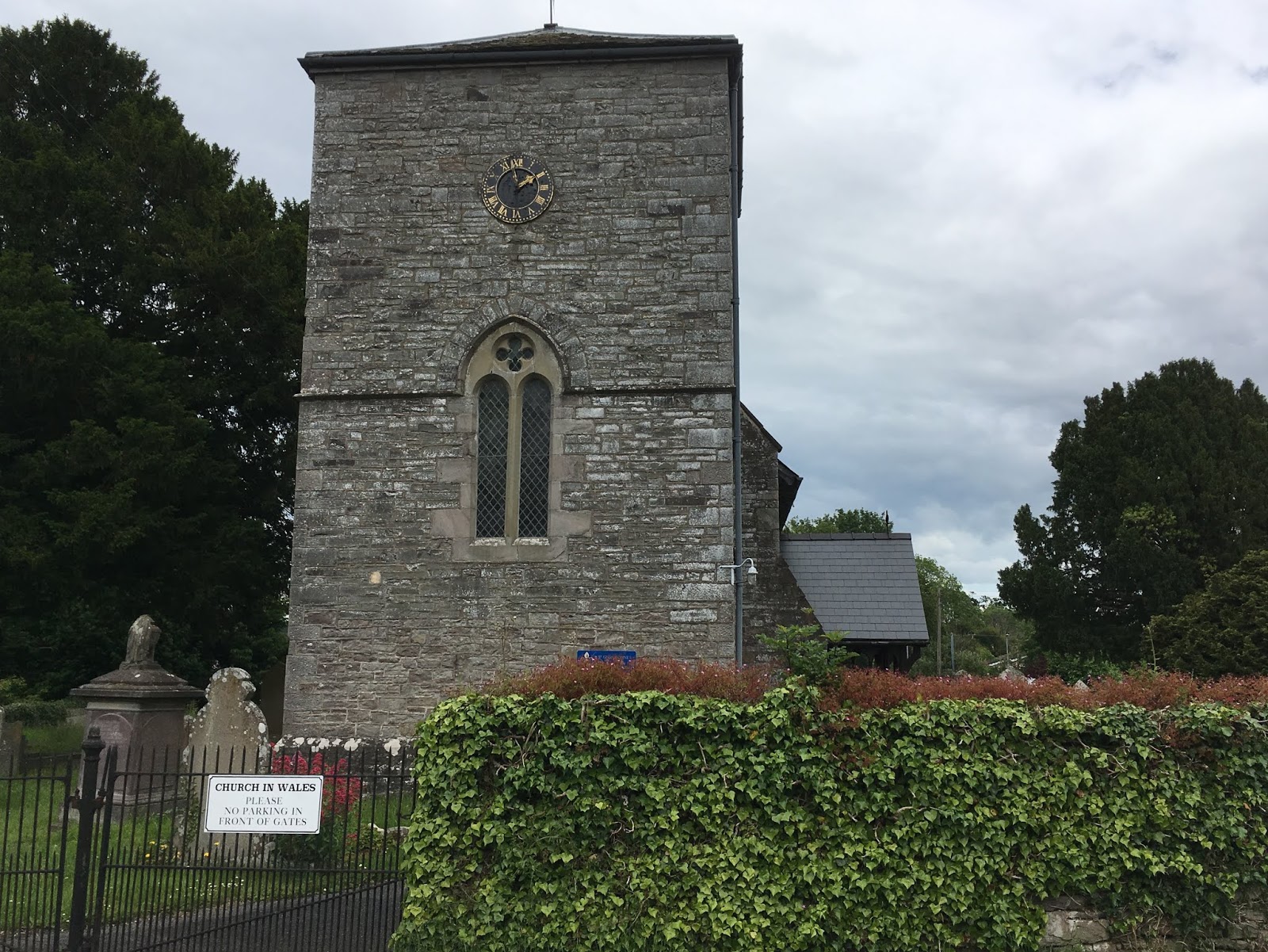
Parking here seems to be a problem but I found a spot nearby and came round to the entrance to the church

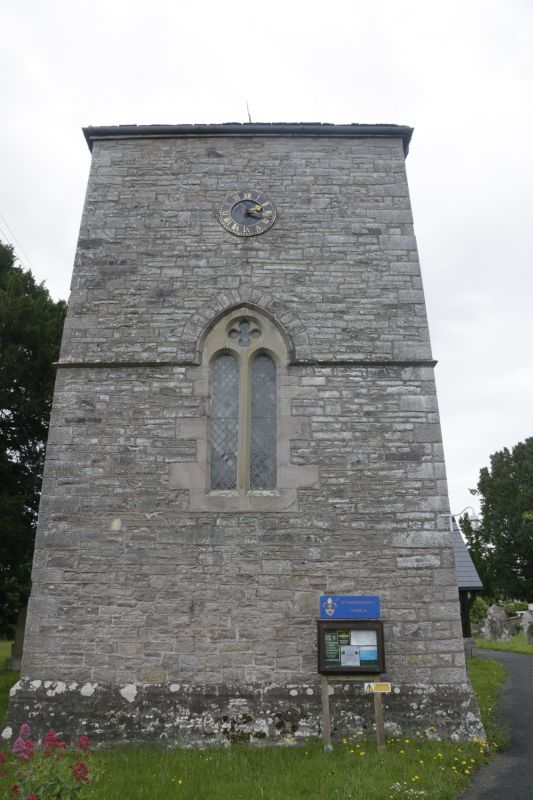
First thing you are faced with belltower on the West end of the church

You go around the South side to find the porch

and across the churchyard to get a better view of the church

Along to the East end

then around to the North side where the churchyard is not as big as the South


The East end has a walled family plot. Right the path through the churchyard passing the porch

In the porch you find a pair of mesh doors to stop birds flying in when the main door is open

In side you look down the aisle

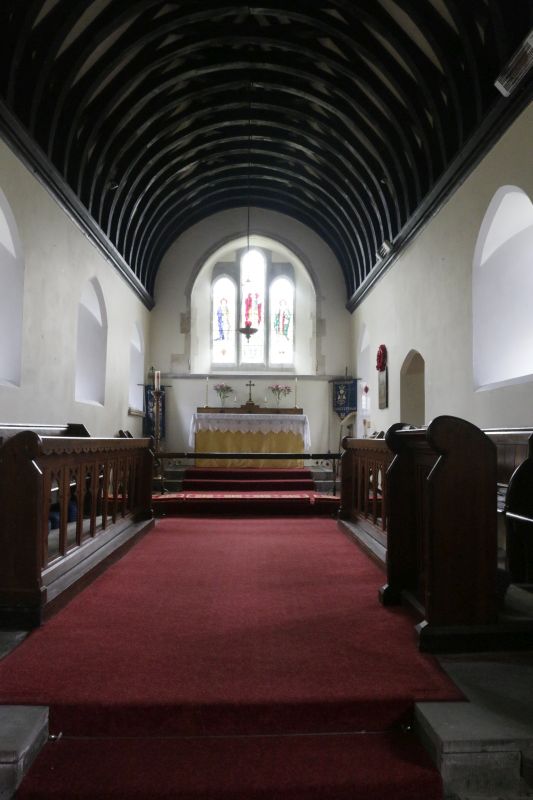
then onto the chancel and finally the altar

The altar with it's covering withe the cross on a screen at the back

The Chancel window which is some superb stained glass


In the chancel you will also find the village Roll of Honour and this teddy sat in the chair on one side

Turn around to look back out of the chancel and down the nave to the organ loft


One one side of the chancel arch is the pulpit on the other is this Poppy from the Tower of London

The view form the pulpit show the whole nave


Most of the windows in the nave have stained glass in them showing different saints
St George here on the left and St Christopher on the right

The windows all have a dedication at the base


The sower sowing the seed and St Non & St David

Finally St Gwendoline

Along the North wall you find a couple of banners showing peace dove


The font which is the survivor from the Norman Church and seen better times form the look

By the entrance you find this church chest


The banner you can see in the chancel of the church on the left and on the right the one beside the poppy

This one is in the Chancel


The organ loft on the left with another view of the pulpit

Before leaving I went in the loft and took a view down the nave and chancel

Back outside there is a fine selection of headstones and monuments

There are even more looking down the South side

Some of the headstones at the West end

Here we look down the North side of the church

One headstone which is in good condition with a couple more in various states of weathering


Above the South side also has a lot of Chest tombs
The path running through the churchyard

Looking west and some more of the churchyard

An ivy covered tomb with a monument behind

A chest tome that has a leg sunk in the ground


Above a fine Family vault on the South side of the church
The North side look West


Above the sunken chest tomb and the monument behind
The churchyard over by the East end wall

Just across the road you find a small cemetery which is the churchyard extension

The graves here are more modern

And there are a fare few graves around it

I will leave you this week with this photo of a Cat I spotted sat by a headstone
Till next time I wish up a peaceful weekend