Saturday, 16 February 2019

Reading Abbey


I finally managed to visit the ruins of Reading Abbey in December 2018, now it is not the first time I have been here, I used to go to school next door and visited on many occasions but after I left it was only once or twice after that. Reading Abbey was founded by Henry I in 1121, when he died in 1135 he was brought back to the Abbey and buried in front of the High Altar

 So this is a model of the Abbey Quarter
 The Abbey I think the area to the top of the picture is where Forbruy road is today
This is what the abbey looked like in height. All that is left of it now is the Abbey gateway just towards the bottom of the photo below the abbey and the area to the right of the South transept


 Above the memorial to Henry Ist and you would have been looking down the nave here.


Right the restored Abbey Gateway


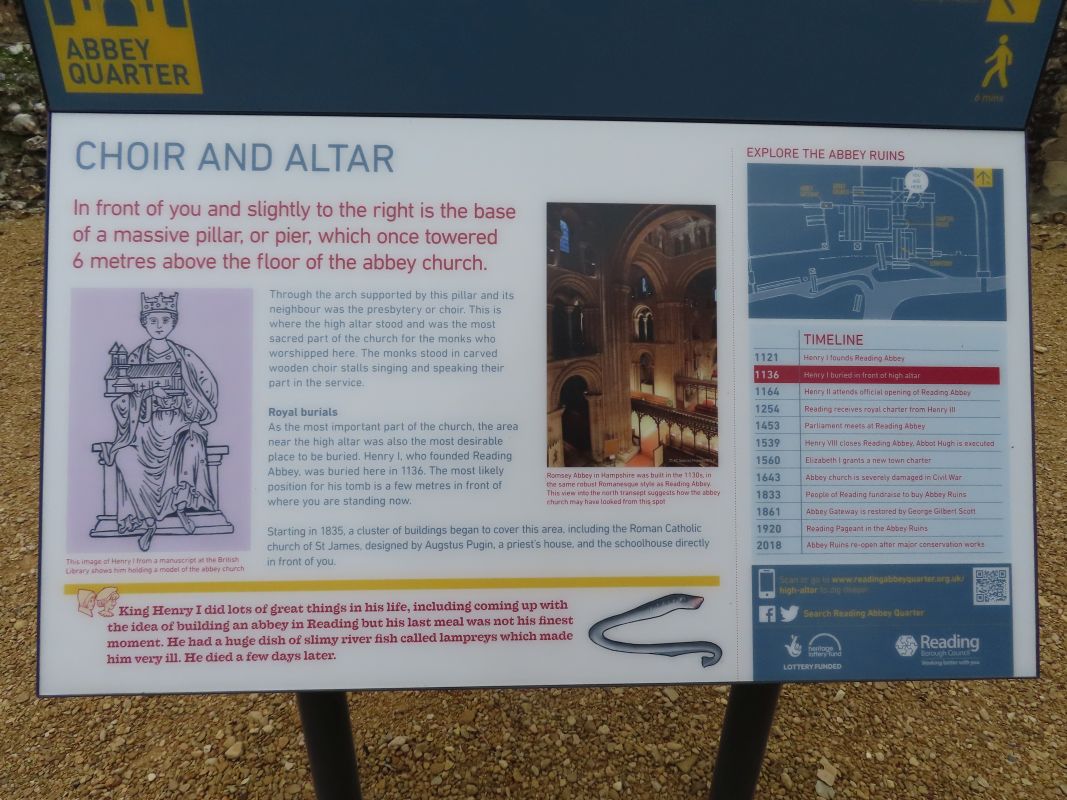
The information board at the entrance to the ruins


The entrance to the Abbey Ruins which for years was shut
 A restored gateway, this takes you along what was the dormitories I'm stood on part of the Cloisters


Another of the information boards and  above the Founders Chapel this would have been the chapel you see to the right of the South transept in the models at the start


A plaque telling you Henry Ist was buried nearby, most Kiley under the school on the other side of the wall




Above the Founders Chapel and what the wall would have looked like, the south aisle is to the left

Another of the info boards


This is the base of one of the Huge support pillars that supported the  church and stood around six meters high (nearly 20 foot)


These board are all around the ruins, they never were when  I was a kid


The end wall of the Treasury


Looking across to the chapter house


Above St James school as I knew it when I used to go there. The school is built around the centre of the cross towards the chancel so the High Altar is around there


 The Chapter house


 The song is Summer is a cumming in


The plaque shows the founding of the Abbey


A memorial to Hugh Cook Faringdon the last Abbot of the Abbey who was put todeath in a most barbaric fashion in front of the Abbey. From what I read he died of hear failure before they could do any thing which is more than could be said for the two others who were killed with him


The end of the Chapter house


This was the monks dormitory 


Looking back up to the chapter house. This part was dug out in the English civil war and during the second world war an air raid shelter was built for the children of St James school. I think it is still there


The dormitory walls, the holes you see in them were where the scaffolding was placed when the built the building


 This takes you along the side of the dormitory towards the chapter house


The chapter house 


Going back to the Abbey


As you walk along here you can see these exhibits 


The show parts of the doorway and the carvings on them


They were found in the grounds


And a picture shows where they went
  Back along the walk


On the way back out you pass more parts of the Abbey


Above a last look of the ruins and left a view down Abbots Walk towards St James school now a children's nursery 


Part of the Abbey remains
near St James Church
 Looking across the Forbury gardens towards the Abbey, St James church is to the left and the school on the right, the Abbey ruins are over to the right between the school and the houses on the right. Reading Prison is in the background.
That's my little walk around the Abbey ruins, if you find yourself in Reading then the ruins are worth the time to look around to see what little remains of them. Next week I will be taking you to Wessex and back to King Alfred's kingdom and the Churches around that area.


Saturday, 9 February 2019

St Afan Llanafan-Fawr


This was the next church along the road from the one last week and ties up nicely my map of that area, no doubt there will be more to find in the future. When I go back to Wales in a few weeks time I will be heading South to see more churches. I found the history below in Wikipedia
"The Church of Saint Afan has been rebuilt several times. The foot of the church-tower is the only part remaining of earlier construction, the rest being rebuilt in 1886. In the porch on the right-hand wall are several carved stones which date from the 7th to 9th centuries. Inside the church, to the left of the altar, is a single pillar stone incised with a Latin ring cross, dating from the 7th century. To the right is an ancient baptismal font of similar age.
There is a 2,200-year-old yew tree in the churchyard. The churchyard claims Saint Afan's relics and is also the burial place of Thomas Huet, who translated the Book of Revelation into the Welsh language in the 16th century. There is also a double gravestone unique in Britain, the left-hand inscription notes that its occupant was murdered and also bears the name of his murderer: John Price Who Was Murdered On The Darren Hill In This Parish By R Lewis April 21, 1826. Relatives of both murderer and victim still live locally"


The day was threatening rain when I got here and started drizzling when I came back out of the church so you may find some of the shot shave spots on them Above and left the South side of St Afan


Heading around to the East end


The the North side


This view is looking from the South East side of the churchyard which is quite large


The bell tower which I must admit I could not tell you where the older part is. Right a small window with a sundial above and plaque below


It's a commemoration plaque and is dated 1765 so predates the rebuild of 1886 so maybe that part is the original tower


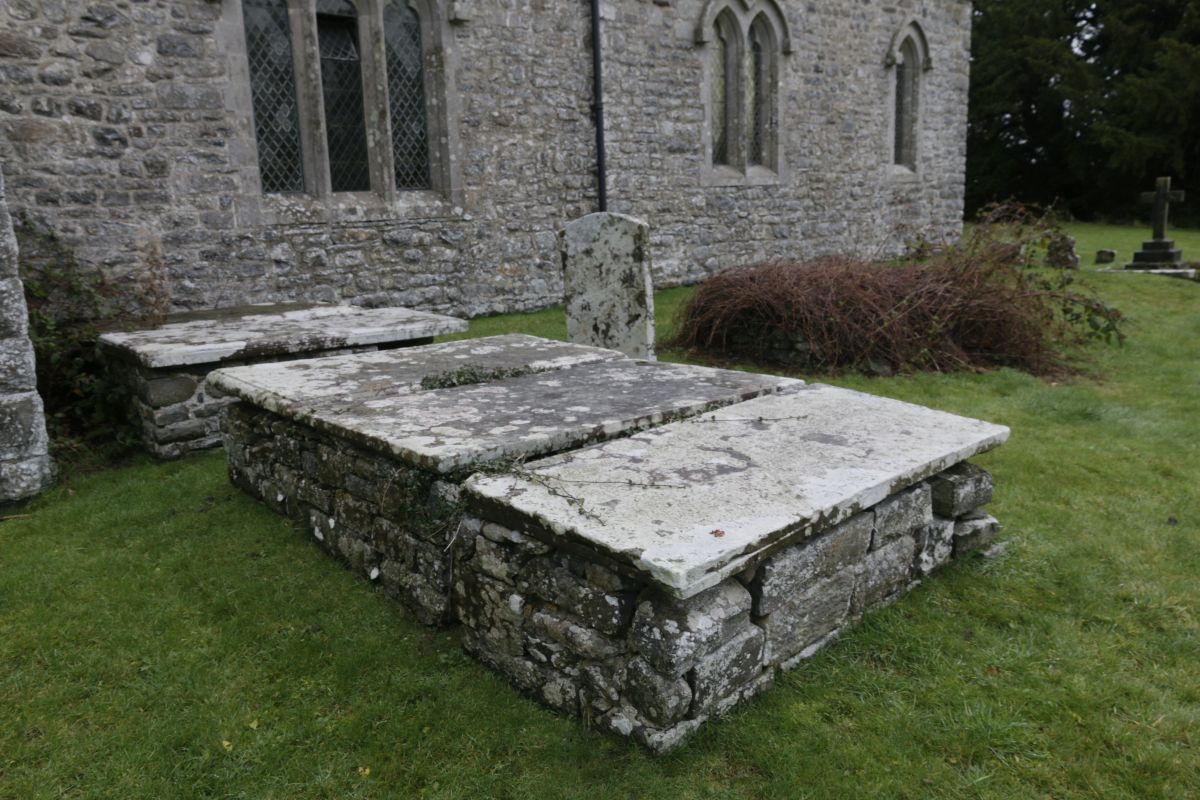
Looking over towards the porch past a few chest tombs
Finally the porch, you might notice my tripod in the entrance as I had finished inside and was taking photos of the churchyard
Here we look up the aisle as the church is single cell though looks quite long

The altar and East Window
Turning around by the altar and looking back through the church to the back

The Altar cross which looks a little wonky


Left the pulpit and right the church organ where you can see the poppy wreaths


The Roll of Honour is on the side of the organ above the poppy wreaths

The nave looking form the pulpit


And some interesting items on the pulpit, the bible is covered in mildew and is quite old


The picture above shows the drawings for a  new rectory it's dated 1889


There are quite a few memorials on the walls


This one shows the lady is buried nearby so maybe in the church, it's dated 1783


More of the memorials


This one is to Elizabeth Reliet who died in 1791 age 61


Thomas Huet which is written in Welsh but has the dates of 1561 & 1591 on it


The memorial to Elizabeth and Thomas Joseph


before we go out a photo of the church font


Took this photo of the churchyard as I came through the gate


And one across to the West


A row of Chest Tombs


More of the churchyard showing another chest tomb and fenced vault


Above I think this is a table tomb, there are a couple of small chest tombs beyond that which have collapsed. Left the area there is overgrown but contains a few graves


An headstone and a pile of stone marking another broken tomb


These maybe miss placed headstones here beside the church


 Further down the churchyard


Here at the far East end of the churchyard you can see more recent burials
I will leave you with this view of St Afan from the far South East of the churchyard. I was quite an interesting church and one I may return to just to find the graves mentioned in the history at the start
Till next time have a wonderful week