Saturday, 18 October 2014

St Margaret Mapeldurham


St Margaret Mapeldurham a small church which sits on the edge of the village of Mapledurham beside the River Thames, the church also backs on the Mapledurham House which is a n Elizabethan Stately Home. Getting to the village entails driving along some narrow treacherous country lanes in South Oxfordshire. Some some of you might recognise the place was used for a film set in the Eagle Has Landed and the church featured heavily in the film. The church was build during the 14th & 15th century's and restored in 1863 by Gothic Revivalist architect  William Butterfield 


The entrance to the churchyard is through these gates on which either side is a stone plaque commemorating the fallen in the Wars
 St Margret's Church


These two photos are screen captures I found on an image search


The church can clearly be seen in the background. Michael Cane who was in the film only lived down the road (or river) at South Stoke though he has moved now.


The church tower with a mixture of brick & flint giving a checker board look. The clock is dated 1832
 View of the south side of the church with the south aisle which is closed


The entrance porch and south aisle


View of the north side of the church with the belltower to the right
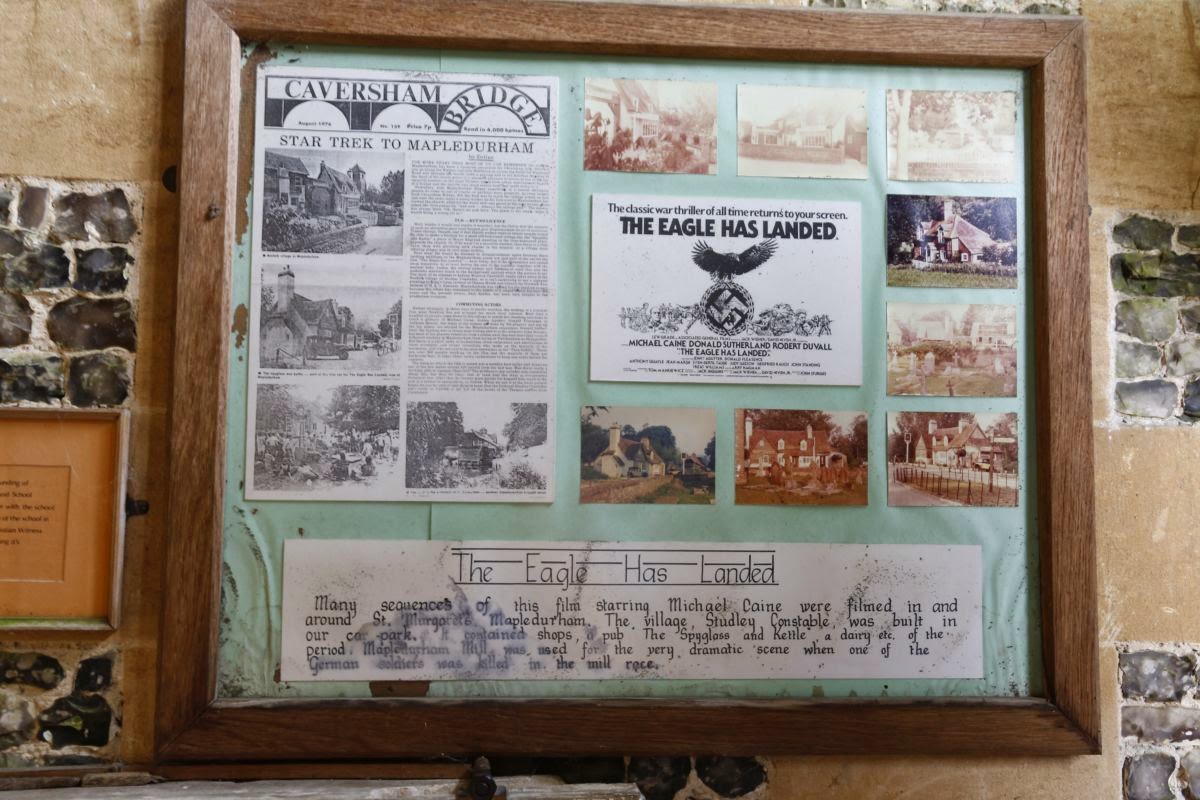


 Heading in the church you can stop off and read about the making of the Eagle had Landed
I've not read the little notice above but this plaque looks like it commemorates the clock you see on the side of the church. The WR on the face gives it away as he gave 100 quid towards it though I note the vicar did not get a mention on it and he sourced £143.

 Inside you can see a wonderful looking church looking very light as you view down the nave

Here we look into the chancel


going into the chancel provides you a view the altar
and rather stunning stained glass chancel window


On either side of the chancel is more stained glass

Not to mention this beautiful memorial to Sir Frank Rose Bart killed in action on October 26th 1914 at the first battle of Ypres

Looking back from the chancel to the nave


 The church organ is just off the chancel in the north aisle
where if you look you can see more superb stained glass hidden from view


This beautiful one is easy to miss


Between the nave and south aisle is this tomb chest with  wonderful effigies on top. You can read about the south aisle and effigies in the note on the right


Some superb craftsmanship went into carving these effigies  it's just a shame the dedication and painting along the side is not easy to read due to the railings put up round them.


looking over is the south aisle which has not been used since the reformation as it is considered property of the catholic owners of Mapledurham house


you can see some beautiful memorials and stained glass and there is more hidden out of sight round the corner


Going round the church other things worth looking at is the war memorial in the corner of the nave


 While you were in the chancel take a look at the ceiling it painted most impressively


While the pulpit is probably carve during the restoration the font looks much older


Flowers always make a nice feature in any church


 This part of the churchyard is relatively new


You can find three wargraves round the churchyard dating from the first war


At the far end of  the churchyard you can see the graves of the Blount Family
 This one I think is the oldest one
 I noticed this on the wall of one of the buildings from the house that faces the churchyard


 This Tomb is under a Yew tree


There is mixture of old an new headstones and tombs around the churchyard that are worth a moment to stop and look at while you are there
Some are broken and the flora getting overgrown but the churchyard is well kept and tidy


I hope you have enjoyed your visit
Since writing this blog I have had the chance to visit the house and the Catholic chapel unfortunately as photography was no allowed in the house I could not get a photo of the chapel but I can tell you it is worth a visit if you get the chance.




Sunday, 12 October 2014

St Patrick Glastonbury Abbey


It never ceases to amaze me how we can always find something new and even in a place you have visited before. This was not the church /chapel I was going to feature this week but after Going to Glastonbury Abbey with my wife to reaffirm our vows I spotted this building I missed last time I was here. Well I had seen it but never realised what it was as at the time we were off on a tour with a guide and it was not on the agenda. After seeing an open door I went inside to investigate and was taken back with what I saw.

This is the outside of the chapel you walk past, not easy to miss you have to admit


Looking up at the bell on the west end and a couple of old plaques, one of the doors leading into the chapel


The east end of the chapel with the Glastonbury  Thorn


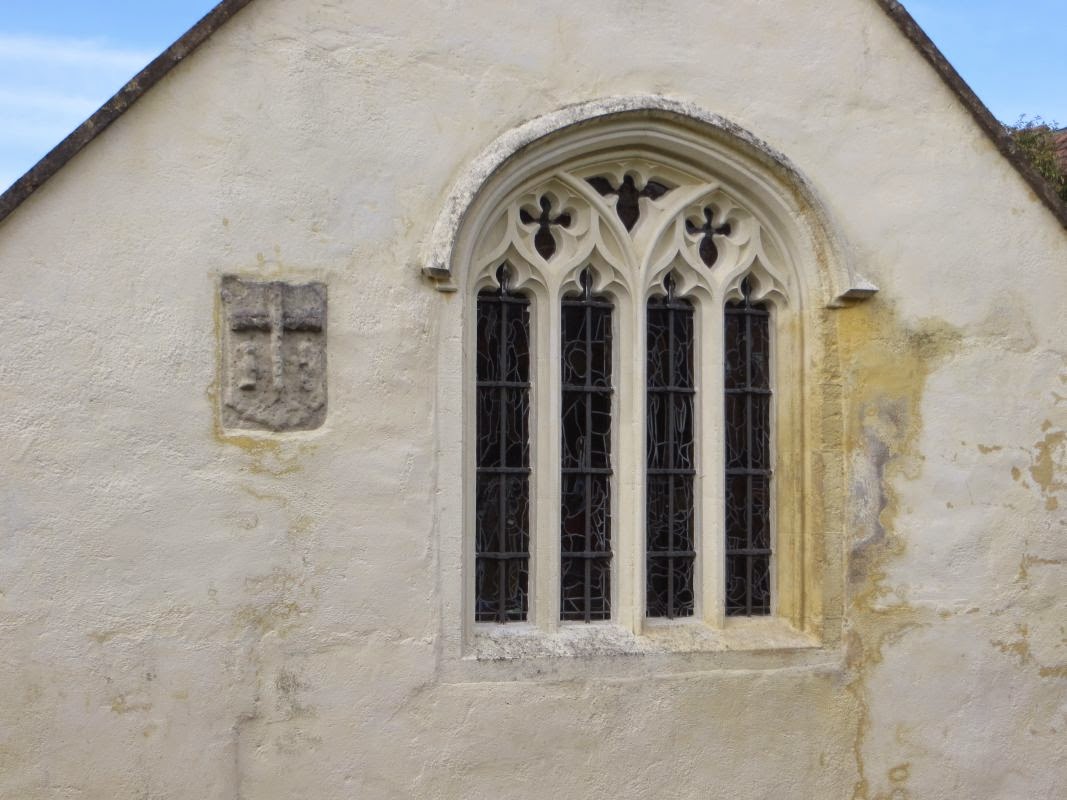
The east end with coat of arms by the window


 Inside is very simple with the walls covered with paintings

The stained glass window is quite beautiful


With a smaller one on the south wall that looks very old


One of the murals round the walls


This one one is on the west end wall


I wonder if this mural depicts Our Lady of Glastonbury, you can read about it on the board I photographed in the museum below


One of things in the chapel was book which was open and had four names in, they were people who had passed away and their ashes were scattered round the chapel grounds, one was scattered near this statue of Sigeric. I came our feeling very privileged to have been in such a beautiful little chapel


Monday, 6 October 2014

Reading Cemetery


This week for my 101st post I am going back to what the blog began as, one about graves. Taphophilia is something I find interesting in that I visit a lot of churchyards  and lately I had the chance to visit Old Reading Cemetery at Cemetery Junction. The cemetery sits between two roads, the London road and the Wokingham road and covers 11. 5 acres.The place opened in 1843 and seemed to closed for burials in 1970 though some burials still take plce of families who own plots there.. It was aplace that was on my list for a while. There are over 18000 graves on the site and 205 war graves of which I took photos of around 100 I came across.

 This is the gatehouse to the cemetery which is a listed building and though no doubt once was used for administration it is now used by the police as a neighbourhood station. There were once two chapels on the site but they have since been demolished.

This is the fist view you get of the cemetery as you go through the gatehouse


One of the wargraves with the gatehouse in the background


A lot of the place gets covered in undergrowth, no wonder  Muntjac Deer live in the place 


Graves of all types


Most in good condition


Some being covered in ivy
 Others stand on their own


Some broken
This one stood out to me


The angels either side looks impressive

Nearby this grave was covered in ivy which had died, no doubt it looked like tree when alive


The cross may well have looked like this memorial on the left. On noticing this unusual cylindrical memorial I turned and was looking at a Muntjac before I could take a photo he decided to leave
Couple of Celtic crosses


Tomb half hidden in the undergrowth


Fallen Angel


Kneeling figure
This was a stunning looking tomb which at one time looked like it was covered in undergrowth


A line of tombs, possibly one family


couple of memorial with dead iivy coverings
Angel on the cross with a broken arm


Bernard Laurence Hiett one of the more famous memorials in the cemetery, mind you it is dwarfed by the memorial to the left of it
More of the lost cemetery being slowly uncovered


Couple more angles


The cemetery is a nice place to walk around if in a difficult area now

Urn becoming lost in the grass

Roll of honor at the War Grave site


The Cross of Victory